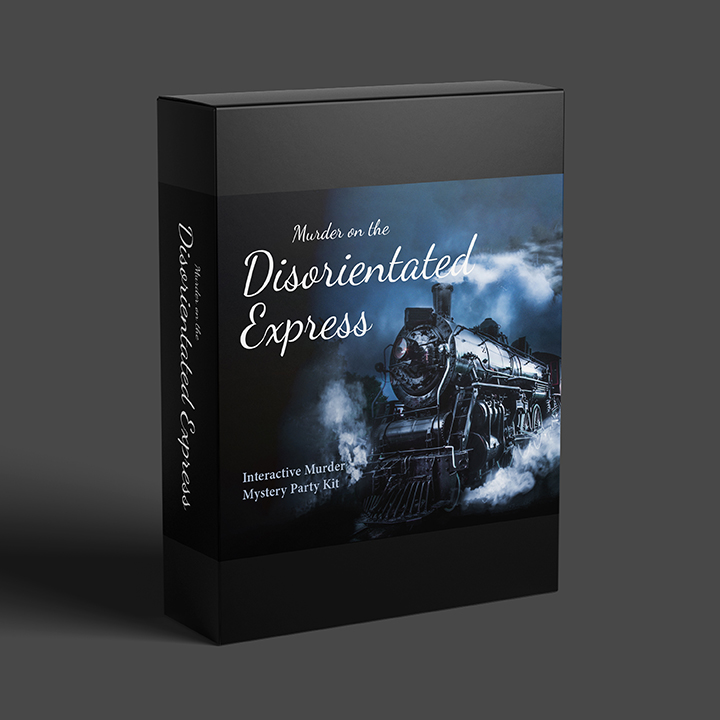
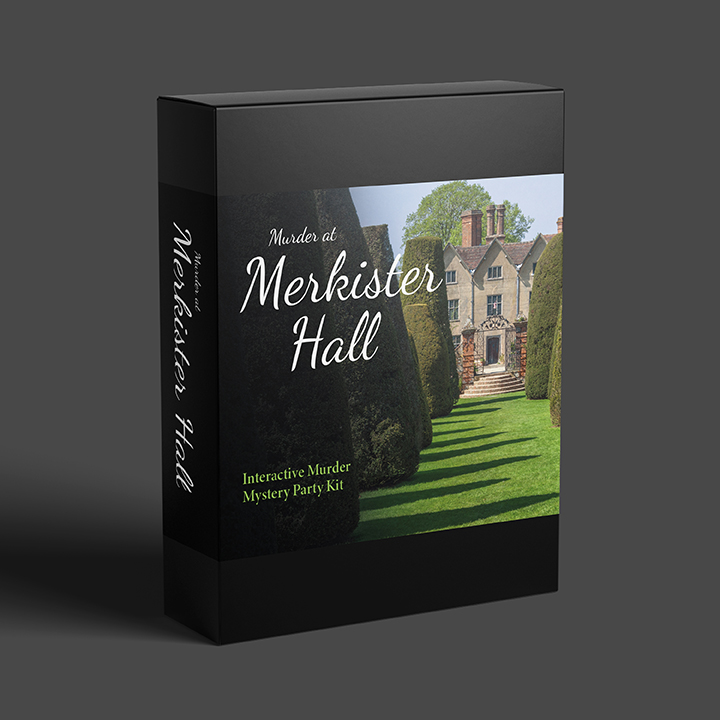
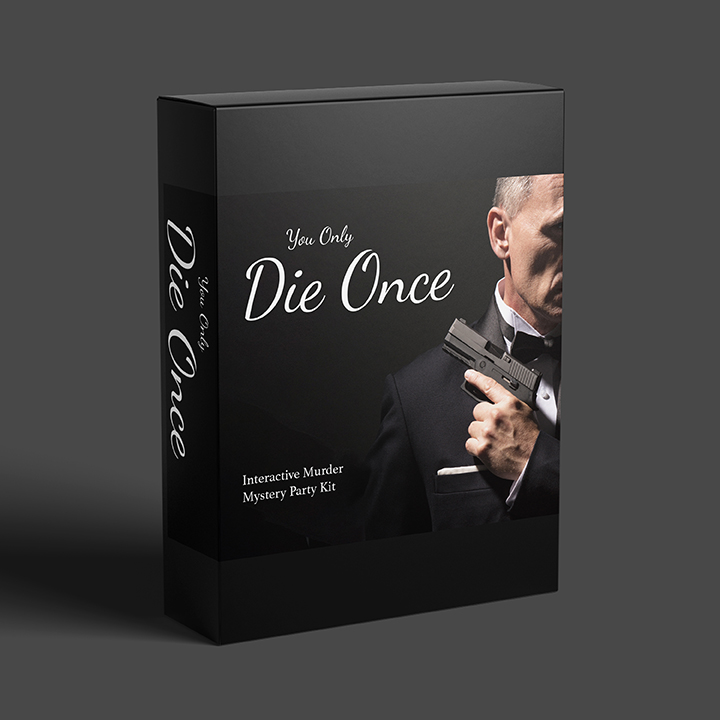
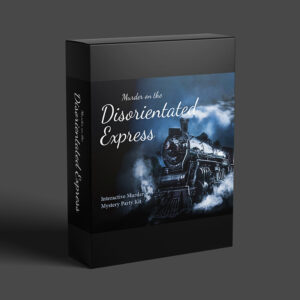
These games require 7-13 cast and have the option of a series of paper clues.
These games work best as a sit down event with 6-12 tables of guests who work as a team, but the games can be adapted to suit multi-room formats as well.
The games contain two options.
Option 1: All clues are provided by cast members.
Option 2: Guests receive questions to ask the suspects (cast members) on paper, and have to find out the answers to these questions from the cast.
As a rough guide these mysteries take approximately 2-3 hours to complete.
Brief introduction to the format of these games.
These murder mysteries can be run in several formats; and can be run either as a sit down event, or as one which encourages the guests to mingle.
Using option 1 the cast used act out dialogue and answer specific questions posed to them by the teams playing, as well as providing questions (clues) of their own which the teams take away to ask another member of cast.
Using option 2 these questions (clues) are provided on paper to the guests each round and can be either shouted out to the cast who can be sat at different tables with the guests, or on a separate table; or asked of the cast when they come to the table during the event.
During these games your guests will listen to five short sets of dialogue and pose questions to each member of cast. There are five rounds which can be evenly spread throughout the night or, if preferred, rounds 1, 2,and 3 can be bunched together into one large round.
At the end of the final round the guests are given time to decide who is the murderer, and once the guests have decided who did it, how and why (i.e. the murderer, means and motive) they will complete the answer sheet and hand it in.
How these games usually run.
These mysteries split into 5 “acts”:
-
• Introductory Round: Introductions by the cast and the facilitator “inspector character”,
-
• Rounds 1, 2 and 3: optional scripted dialogue and questions and answers,
-
• Concluding Statements and solution: conclusions by the cast and solution.
The timing for these “acts” does not need to be precise, you may even want to bunch rounds 1, 2 and 3 together; however it is critical that the guests are given a reasonable amount of time to question all the cast in rounds 1, 2, and 3 before they are asked to make a decision as to who the murderer is and the mystery is concluded.
There is one “inspector character” who acts as facilitator during the event and is essential to the cast. There are also 6 non-optional cast members which need to be used for the event to work, as well as 6 non-optional characters.
These optional characters can be utilised or dropped from the mystery without any adverse effects on the game. It will not be clear to the participants that these are optional cast, as they also have motive. Reducing the cast size will reduce the length of time required to solve the mystery.
If you are conducting the mystery as part of a three course meal the rounds can be arranged as follows:
Introductory Round: Should occur once all guests have assembled in their teams.
Round 1: Before, during or after the starter
Round 2: Before, during or after the main course
Round 3: Before, during or after the pudding
Concluding Statements and Solution: During or after tea/coffee and mints.
Your job as host
As host it is your job to make sure everyone is comfortable with what they are being asked to do, and that the event passes off without a hitch.
Make sure you have adequate time to prepare for the event, that all cast are happy with their scripts and that anything else you plan to run at the same time as the mystery e.g. refreshments, has been adequately thought through.
Although the guests will have been given their instructions, sometimes these are simply not enough, especially if they are nervous of their role in the mystery. As host it will be your job to make sure they understand what is expected of them. During the event you might want to ensure that, either the person playing the “inspector character” is available to move around the tables to ensure each team understands their instructions, or that you have a few extra people who can perform this role. The cast themselves should also be prepared to point people in the right direction.
Running a large group murder mystery is really not as difficult to do as you might think, and if you get stuck why not email us ? We’re here to help after all! Finally and most importantly: Have fun!
|